
Serengeti vs Ngorongoro Crater: Which Should You Visit?
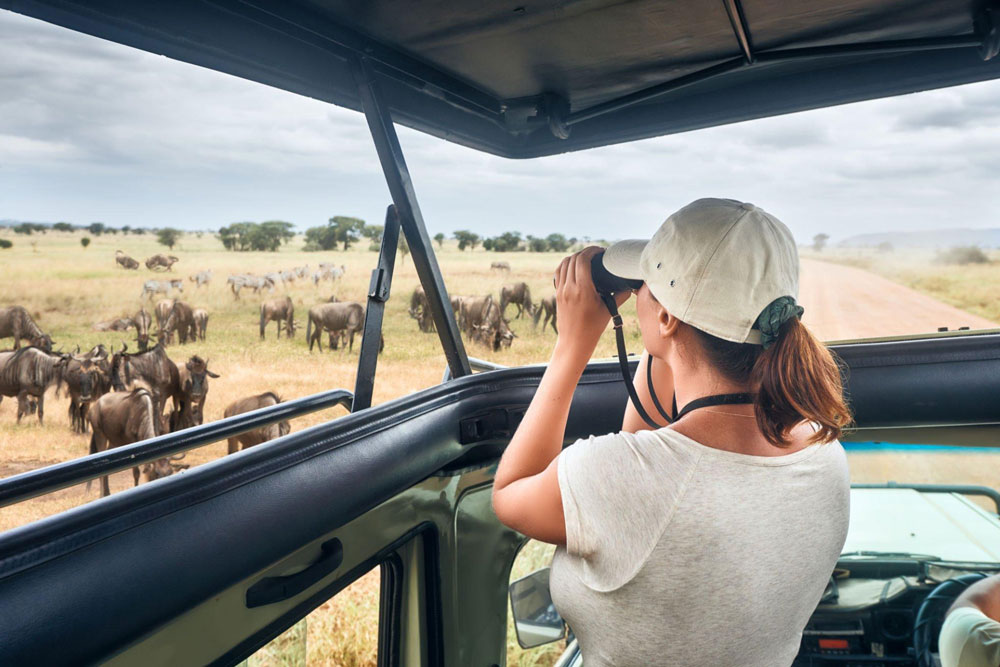
If you’re planning a Tanzania safari with Havillah Tours & Safaris Ltd, you’ve likely asked yourself this question: Serengeti or Ngorongoro Crater? Having guided travelers through both destinations across hundreds of safaris, we can tell you there’s no single right answer — it depends on your time, budget, and what you want from your trip. Below, we break down both destinations honestly so you can decide what fits you best, or why (as most of our clients do) you might want both.
Two Different Kinds of Wild
The Serengeti and Ngorongoro Crater sit less than a three-hour drive apart in northern Tanzania, yet they offer fundamentally different safari experiences. Understanding that difference is the key to choosing well.
The Serengeti is vast — roughly 14,750 square kilometers of open plains, woodlands, and kopjes (rocky outcrops) stretching to the horizon. It’s the stage for the Great Migration, where over 1.5 million wildebeest and hundreds of thousands of zebra move in a continuous, seasonal loop searching for grass and water. This is safari in its most expansive form: long game drives, big skies, and the sense that anything could appear over the next rise.
Ngorongoro Crater, by contrast, is intimate and self-contained. It’s the world’s largest intact volcanic caldera, about 260 square kilometers across, with walls rising 600 meters around a dense concentration of wildlife that rarely leaves because water and grazing are abundant year-round. You descend into it for the day, see an extraordinary density of animals in a compact area, and ascend again by evening.
Serengeti: The Case For It
Scale and the Migration. If witnessing the Great Migration — river crossings at the Mara or Grumeti, calving season on the southern plains, or simply the sheer scale of a million animals moving together — is on your bucket list, the Serengeti delivers an experience Ngorongoro cannot replicate. Timing matters here: calving season runs roughly December through March in the southern Serengeti and Ndutu area, while river crossings typically happen from June through September in the north.
Predator action. The Serengeti holds healthy populations of lion, leopard, and cheetah, with enough open terrain that chases and hunts are genuinely visible rather than obscured by bush.
Variety of landscapes. From the Seronera Valley to the kopjes of the central Serengeti to the riverine forests near the Grumeti River, the park offers real ecological diversity, which means different game and different scenery depending on where you stay.
More time, more reward. The Serengeti rewards multi-day stays. Because the park is so large, a single game drive only scratches the surface — most seasoned safari-goers recommend at least three nights to appreciate it properly.
The trade-off. You’ll spend more time driving between sightings, and because it’s not a closed system, wildlife density per square kilometer is lower than in the crater, especially outside migration season.
Ngorongoro Crater: The Case For It
Density and reliability. The crater floor holds an estimated 25,000 to 30,000 large animals year-round, including one of Tanzania’s best chances of spotting the endangered black rhino alongside lion, elephant, buffalo, hippo, and large herds of wildebeest and zebra. Because the ecosystem is contained, your odds of seeing the “Big Five” in a single day are genuinely high.
Efficiency. A crater floor visit is typically a single, full-day game drive — you descend in the morning and climb back out by late afternoon. For travelers short on time, this means seeing an exceptional concentration of wildlife without committing several days.
Scenery. The crater itself is spectacular from the rim — a UNESCO World Heritage Site, and the descent through forest into open grassland and soda lake is dramatic in a way few other safari destinations match.
Flamingos and birdlife. Lake Magadi on the crater floor regularly attracts flocks of flamingos, adding a different visual and ecological dimension to the game drive.
The trade-off. Because access is restricted to a single descent road and a limited number of vehicles are permitted on the floor at a time, the crater can feel busier than the Serengeti during peak season, particularly around prime sightings. It’s also a one-day experience by design — there’s no multi-day exploration within the crater itself, and a separate vehicle service charge applies on top of standard park and conservation fees to descend into the crater.
Cost Considerations
Both destinations charge daily park or conservation fees that are typically bundled into your safari package price, but it’s worth understanding what you’re paying for. As of 2026, Serengeti National Park entry fees for foreign non-resident adults run in the range of roughly $70 per person per day, with Ngorongoro Conservation Area fees in a similar bracket, plus an additional per-vehicle service charge specifically for descending into the crater. Because these government-set fees are non-negotiable and change periodically, we always recommend asking any operator — Havillah included — for a clear breakdown of what’s included in your quoted price, rather than assuming “all-inclusive” covers everything. We build this transparency into every itinerary we prepare.
Best Time to Visit Each
Timing shifts the calculus between these two destinations:
- For the Great Migration’s dramatic river crossings, visit the Serengeti’s northern sector between June and September.
- For wildebeest calving season, the southern Serengeti and Ndutu area peak from December to March — though note this area sits administratively within the Ngorongoro Conservation Area, so a Ndutu safari often blends both worlds.
- Ngorongoro Crater is a strong choice year-round, since its wildlife doesn’t migrate seasonally the way Serengeti’s does, though the dry season (June to October) offers the clearest visibility and easiest driving conditions.
- The short rains (November) and long rains (March to May) bring fewer crowds and lush, photogenic scenery to both parks, at the cost of occasional muddy roads.
So, Which Should You Choose?
Choose the Serengeti if:
- You have four or more days available
- Witnessing the Great Migration is a priority
- You want varied landscapes and the feeling of true wilderness
- You’re comfortable with longer game drives in exchange for a bigger, wilder canvas
Choose Ngorongoro Crater if:
- You have limited time (even a single day delivers results)
- You want the highest-probability sighting of the Big Five, including rhino
- You prefer a more contained, predictable wildlife-viewing experience
- Photography of dense wildlife in dramatic scenery is a priority
Choose both if:
- You can spare five to seven days — which is what we recommend to most clients
- You want the full spectrum of what northern Tanzania offers: the crater’s concentrated drama followed by (or preceded by) the open expanse of the Serengeti
Our Honest Recommendation
At Havillah Tours & Safaris Ltd, the overwhelming majority of itineraries we design combine both destinations, and for good reason: they complement rather than compete with each other. A typical well-paced route might include two nights near or in the Ngorongoro Conservation Area (with a full-day crater descent) followed by three to four nights in the Serengeti, moving through different sectors depending on the season and migration patterns.
If you’re genuinely constrained to one or the other, let your priorities decide it: migration spectacle and open-plains wilderness point you to the Serengeti; maximum wildlife density in minimum time points you to the crater. Neither choice is wrong — both are extraordinary, and each reveals a different side of what makes northern Tanzania one of the greatest wildlife destinations on Earth.
Whichever you choose, the details that matter most — timing your visit to the migration or calving patterns, understanding current park fees, and matching your itinerary pace to your travel style — are exactly where working with an experienced local operator makes the difference between a good safari and an unforgettable one. That’s the planning work we do for every client, every time.